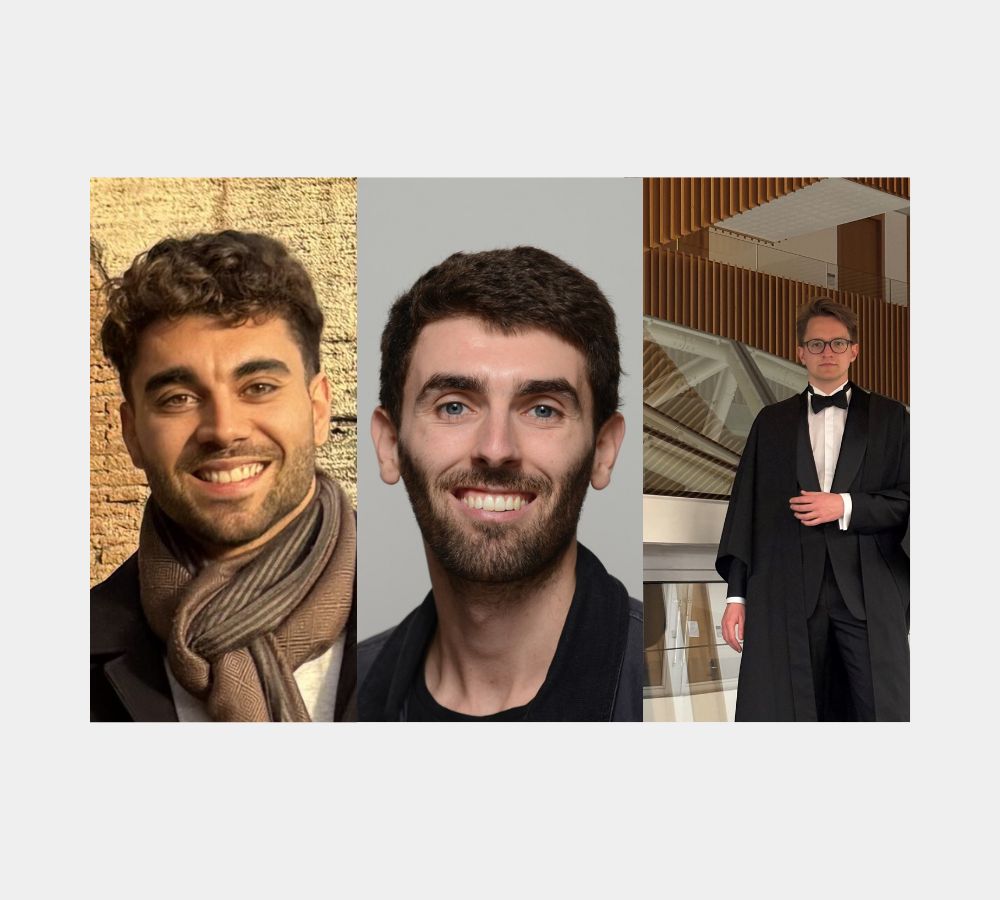
G-Research 2025 PhD prize winners: University of Oxford

29 May 2025
  • News
  • Quantitative research

Every year, G-Research runs a number of different PhD prizes in Maths and Data Science with academic institutions in the UK, Europe and beyond.

Each prize is worth up to £10,000 and is open to final or penultimate year PhD students at specific universities, working across areas including Machine Learning, Quantitative Finance and Mathematics.

We’re pleased to announce the winners of the first prize of 2025, which ran in conjunction with the University of Oxford.

Learn more about our prizes
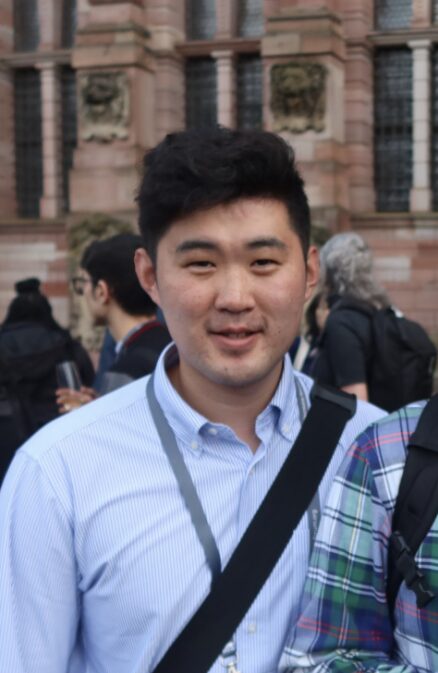
1st Place: Taejun Park

“My research focuses on randomised algorithms in numerical linear algebra.

“As the volume of data continues to grow rapidly in our data-driven world, scalable algorithms are becoming increasingly important. I develop and analyse randomised methods that efficiently enhance fundamental linear algebraic tasks, enabling their application to large-scale computational problems.

“My primary interest lies in randomised low-rank approximation techniques, such as the Nyström method and CUR decomposition, which are widely applicable in areas such as kernel-based methods, matrix differential equations, and data streaming.”

Young man smiling and facing camera wearing collared shirt and shoulder bag outdoors in front of an ornate stone building with other people in background

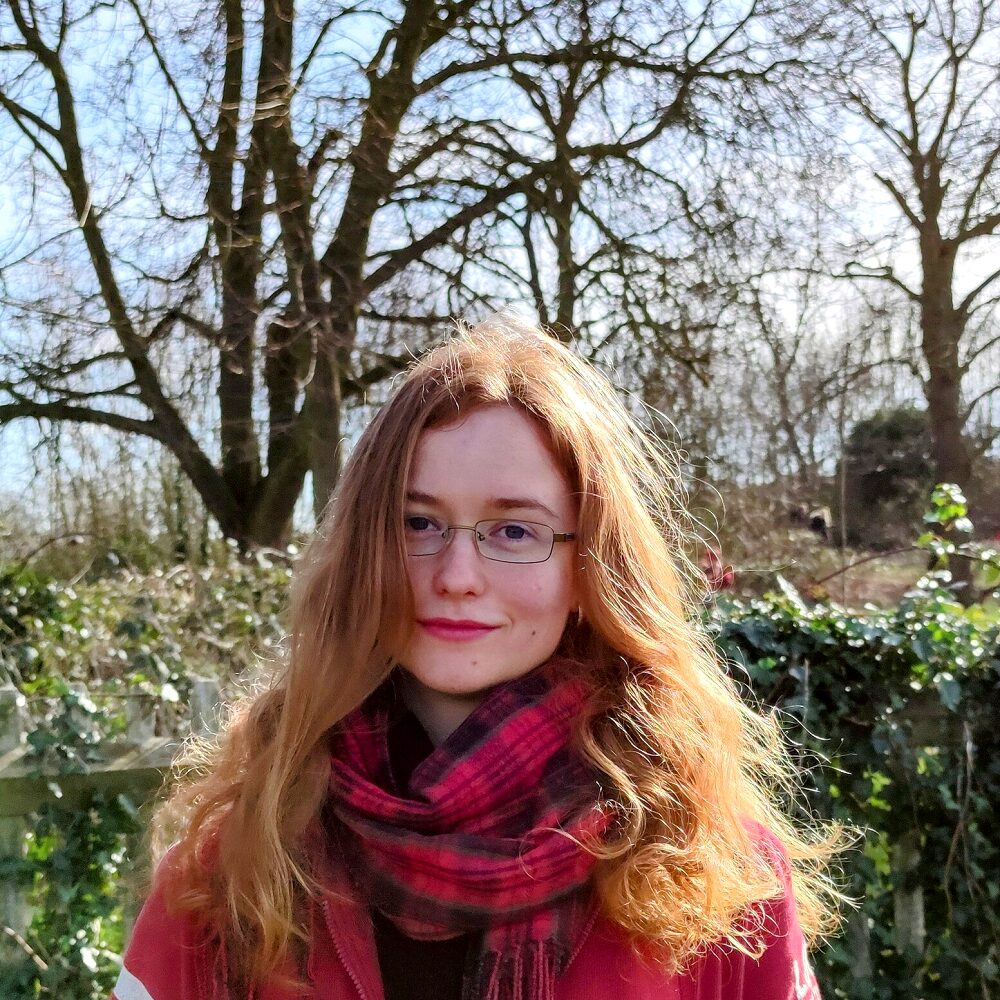
Runner up: Mihaela Stoian

“My research focuses on developing neuro-symbolic methods that integrate background knowledge constraints into neural networks during training and enforce them at inference time.

“I am particularly interested in incorporating such constraints into deep generative models for synthesising realistic tabular data. During my PhD, I demonstrated that linear constraints and even more expressive ones, such as disjunctions over linear inequalities that model non-convex and disconnected spaces, can be integrated during training to enhance the quality of synthetic data.

“My broader research vision is to bring neuro-symbolic AI to real-world applications, taking a step closer to building reliable systems.”

Young woman with long red hair stands facing camera wearing glasses and a red scarf in a sunlit winter park with bare trees ivy and a wooden fence

Runner up: David Geldbach

“I am interested in the mathematical study of spatial branching processes in inhomogeneous environments.

“Spatial branching processes model spatial growth and the spread of genes or diseases in populations. Here, I am interested in what strategies allow particles be successful, that is to be at the frontier of the growth process.

“This question becomes even more interesting when considered in inhomogeneous environments where I study the interplay of effects caused by random motion, random reproduction and random environment.”

Young man wearing glasses smiles with arms crossed standing in a softly lit modern office space with blurred windows desks and overhead lights

Runner up: Álvaro Arroyo

“I am a final-year DPhil student at the University of Oxford. I am broadly interested in both the empirical and theoretical aspects of deep learning.

“My current research focuses on the intersection between graph machine learning and sequence modelling.

“I am also interested in machine learning applications to spatio-temporal data, such as that found in quantitative finance or physical simulations.”

Person looks directly at camera with neutral expression short brown hair light facial stubble wearing dark sweater against soft dark studio background

All shortlisted candidates were of excellent calibre, spanning a range of topics from algebra to machine learning, and all demonstrating excellent potential as evidenced by the breadth and depth of their submissions.

George Deligiannidis Director of MSc in Statistical Science

Learn more about our PhD prizes

We run multiple PhD prizes every year across the UK, Europe and more.

Dark liquid swirl flows and folds across a smooth surface with soft highlights and deep shadows creating an abstract marble like grayscale pattern

Latest events

  • Technology innovation and open-source

KubeCon Europe 2026

23 Mar 2026 - 26 Mar 2026 RAI Amsterdam, Europaplein 24, 1078 GZ Amsterdam
  • Machine learning
  • Quantitative research

NVIDIA GTC 2026

16 Mar 2026 - 19 Mar 2026 San Jose McEnery Convention Centre
  • Machine learning
  • Quantitative research

Spring into Quant Finance 2026

12 Apr 2026 - 17 Apr 2026 Palermo, Sicily, Italy

Stay up to date with G-Research