Each month, we provide up to £2,000 in grant money to early career researchers in quantitative disciplines.
Our aim is to support and assist PhD students and postdocs conducting research, particularly with costs that may be difficult to get funding for elsewhere, for example, travel for those who are caring for children, or expenses for volunteer work related to research.
Read on to hear from our latest winners, their research and how our grants will aid their work.
February grant winners
Alek Fröhlich (Italian institute of Technology)
“I am a second-year ELLIS PhD student working at the interface of mathematics and computer science.
“My research focuses on leveraging low-rank spectral structure to develop scalable and statistically rigorous methods for causal inference and uncertainty quantification with high-dimensional data.
“The G-Research grant will support my research visit to École Polytechnique, enabling in-person collaboration with my co-advisor and further advancing my work.”
Aurelie Sangare (University of Oxford)
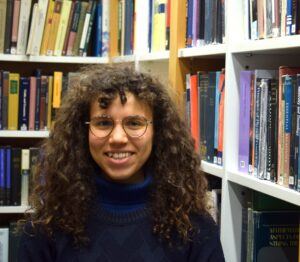
“I am a PhD student conducting research in mathematical physics at the University of Oxford, specialising in scattering amplitudes in string theory – a leading candidate for a quantum description of gravity. The formulation of a theory of quantum gravity remains one of the greatest challenges in modern theoretical physics. If achieved, it would have far-reaching consequences on physics, mathematics and our philosophical understanding of space and time.
“String theory provides a compelling framework for addressing this challenge and further intertwines a vast range of subjects across mathematics and physics, including particle physics, black holes and number theory. Scattering amplitudes in string theory – the objects that I study in my PhD – provide a deep insight into the rich mathematical structure and physical principles underlying the theory.
“My grant from G-Research will allow me to participate in the conferences String Math 2026 in Edinburgh and Bootstrap 2026 in London, whose areas of focus are central to my research.”
Alexander Champion (University College London)
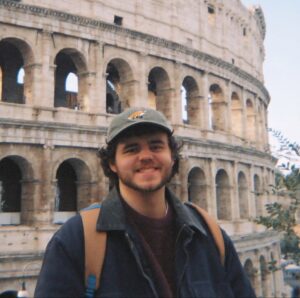
“I’m a first-year PhD student with the High Frequency Quantum Engineering Group at UCL. My background is in computational and theoretical physics and I have previously interned at CERN. For my MSc research project, I worked on calculations for experimental tests of quantum gravity.
“My current work focuses on the design, optimisation, construction and operation of superconducting qubits and circuit components at Terahertz Frequencies, allowing us to reach previously unobtainably high temperatures.
“The G-Research Grant will allow me to attend conferences abroad and develop collaborations with researchers all over the world.”
Congratulations to all of our grant winners.