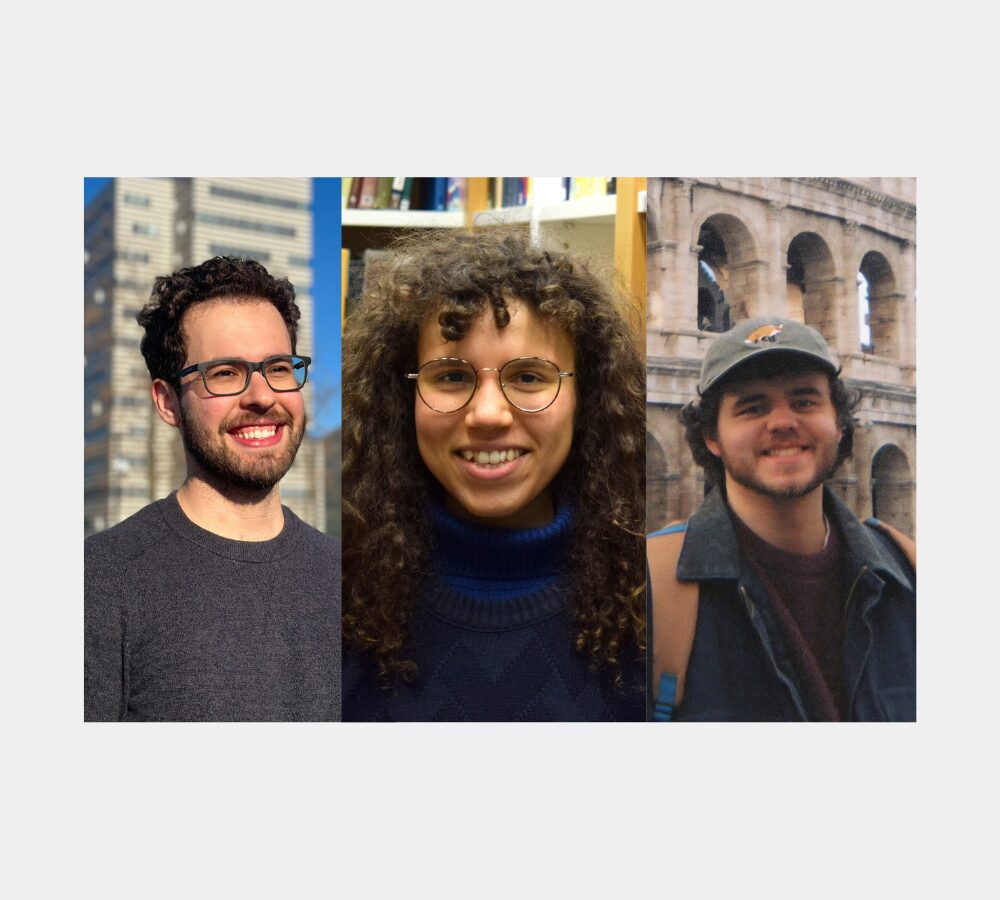
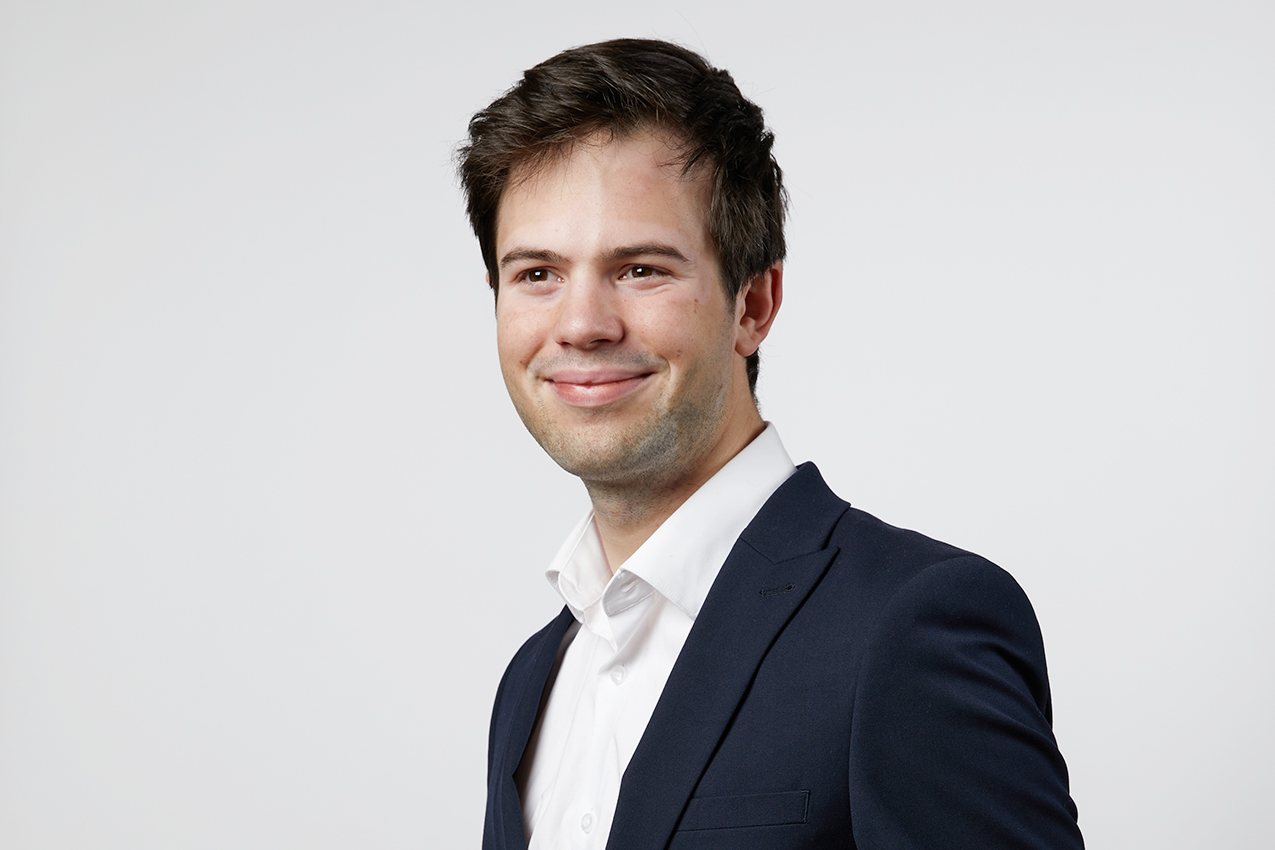
Each month, we provide up to £2,000 in grant money to early career researchers in quantitative disciplines.
Our aim is to support and assist PhD students and postdocs conducting research, particularly with costs that may be difficult to get funding for elsewhere, for example, travel for those who are caring for children, or expenses for volunteer work related to research.
Read on to hear from our latest winners, their research and how our grants will aid their work.
January grant winners
Manuel Lecha (University of Oxford)
“I’m an ELLIS PhD student with a background in mathematics and computer science.
“My current focus is developing graph foundation models that generalise across heterogeneous graph data and tasks.
“The G-Research grant will support my research stay at the University of Oxford, facilitating in-person collaboration there.”
Lancelot Da Costa (ELLIS Institute Tübingen)
“I am a mathematician developing foundations for understanding and building intelligence.
“My work has formalised a key theory of brain function and I now use these ideas to develop AI agents that learn like scientists.
“The G-Research grant will allow me to present my latest work, Natural Building Blocks for Structured World Models, at the World Modeling Workshop in Montreal and upcoming work at ICML in Seoul.”
Konstantin Riedl (University of Oxford)
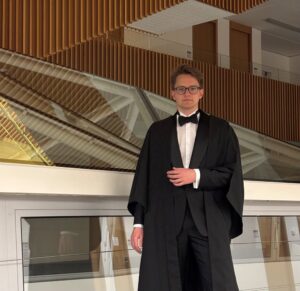
“I am a Postdoctoral Research Associate in Deep Learning at the Mathematical Institute of the University of Oxford, and a Research Fellow in Artificial Intelligence & Machine Learning at Reuben College.
“My research interests lie in applied mathematics, specifically machine learning, optimisation, scientific computing and their interfaces. I focus on the design and the mathematical and numerical analysis of algorithms and methods used in these areas.
“My long-term aim is to advance our mathematical understanding of machine learning methods and models by developing rigorous mathematical analysis frameworks for the training algorithms and the neural network models used in several important areas of machine learning.
“The G-Research grant will allow me to organise the 2nd edition of the “Workshop on the Mathematics of Transformers” at the University of Oxford. The workshop will focus on the transformer architecture and its underlying (self-)attention mechanisms that gained substantial interest in recent years.”
Congratulations to all of our grant winners.