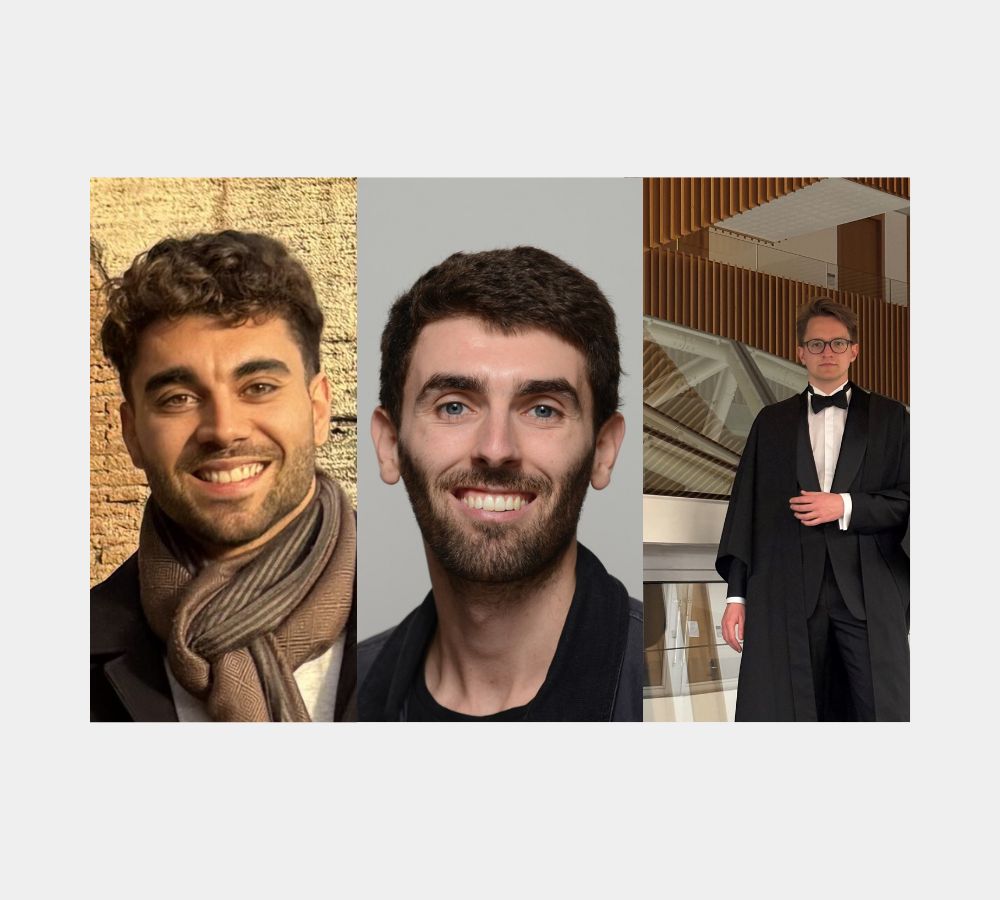
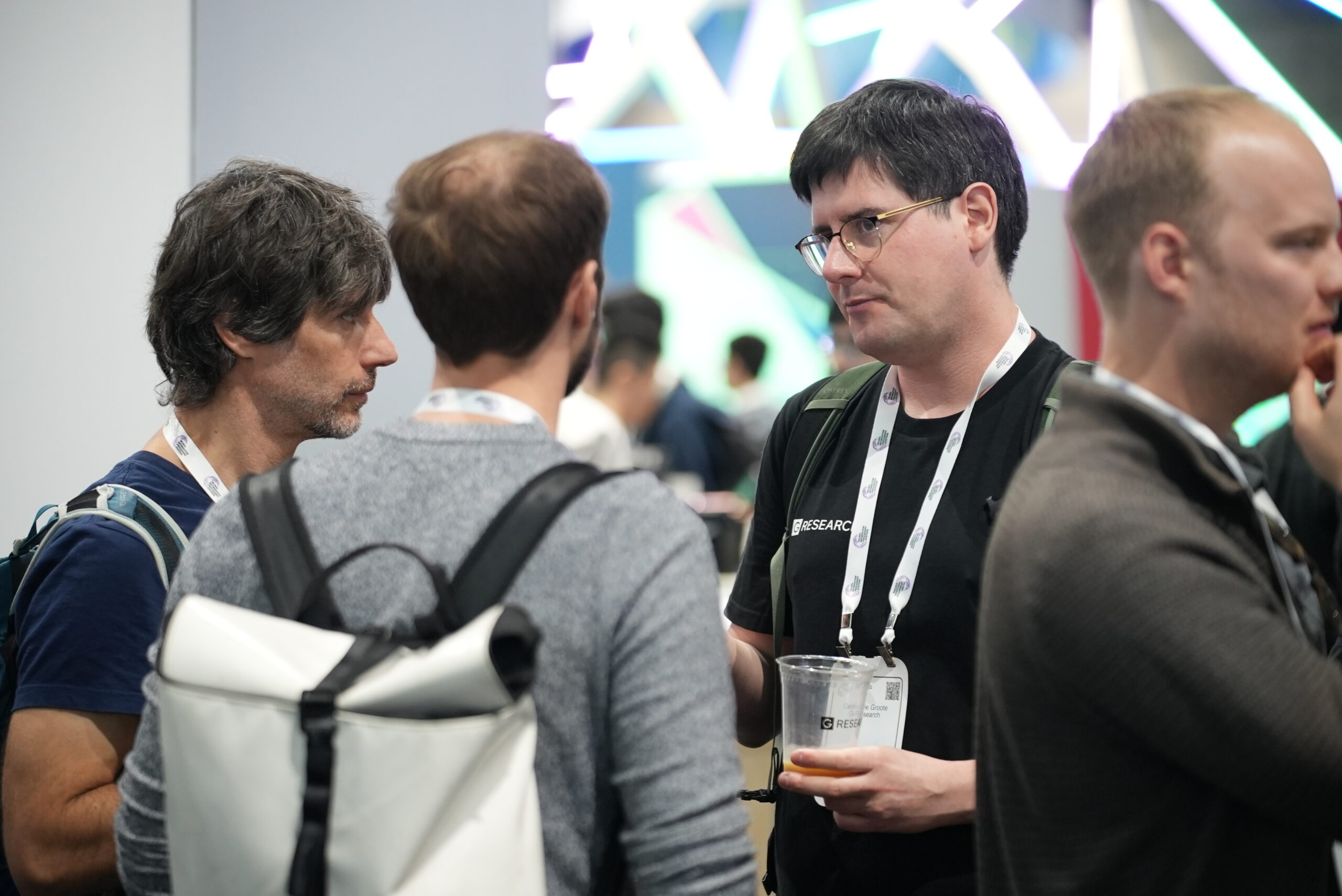
Each month, we provide up to £2,000 in grant money to early career researchers in quantitative disciplines.
Our aim is to support and assist PhD students and postdocs conducting research, particularly with costs that may be difficult to get funding for elsewhere, for example, travel for those who are caring for children, or expenses for volunteer work related to research.
Read on to hear from our latest winners, their research and how our grants will aid their work.
October grant winners
Dimitri Meunier (University College London)

“I am a PhD researcher at the Gatsby Computational Neuroscience Unit, working with Arthur Gretton. My work focuses on statistical learning theory and its applications in causal inference and representation learning.
“G-Research’s grant will enable me to attend NeurIPS in San Diego, where I have three papers to present:
- Regularized Least Squares Learning with Heavy-Tailed Noise is Minimax Optimal – establishing the robustness of RLS methods under heavy-tailed noise.
- Demystifying Spectral Feature Learning for Instrumental Variable Regression – clarifying when spectral feature learning methods benefit causal effect estimation.
- Density Ratio-Free Doubly Robust Proxy Causal Learning – introducing the first high-dimensional doubly-robust estimator for proximal causal inference.”
Gabriel Melo (Institut Polytechnique de Paris)
“I’m a first-year PhD student in Applied Math and Computer Science at Institut Polytechnique de Paris, working within the Statistics, Signal and Learning (S2A) team.
“My research focuses on uncertainty quantification in graph prediction, combining ideas from Optimal Transport, Graph Representation Learning and Generative Modelling.
“The G-Research grant will support my attendance at NeurIPS 2025 in San Diego, where I will present our work on Graph Autoencoders.”
Jan Ondras (Massachusetts Institute of Technology)

“I am a second-year PhD student in Mathematics at Massachusetts Institute of Technology (MIT). My research interests include modelling complex dynamical systems and the intersection of mathematical reasoning and AI.
“The G-Research grant will support my attendance at the NeurIPS 2025 conference to present my work, “FractalBench: Diagnosing Visual-Mathematical Reasoning Through Recursive Program Synthesis”. This opportunity will allow me to learn first-hand about recent advances in the field, engage with leading researchers and build meaningful connections. I am very grateful to G-Research for making this possible.”
Congratulations to all of our grant winners.