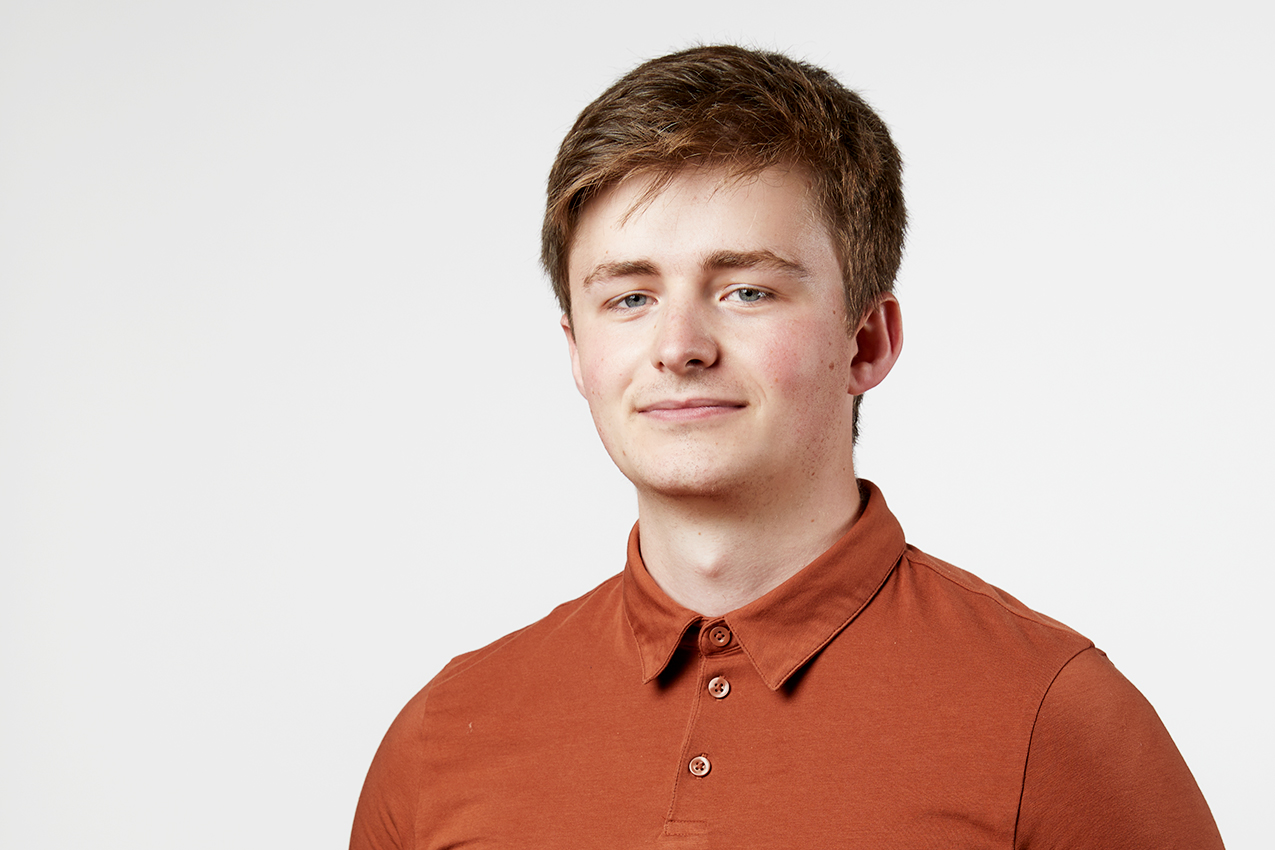
Meet the NextGen scholars: Matt

27 May 2026
  • NextGen

Meet the Scholars – a blog series celebrating the talented students supported by G-Research scholarships. These awards form a key part of our NextGen initiative, which is dedicated to nurturing the next generation of researchers in STEM and AI/Machine learning (ML).

These stories spotlight the individuals driving the future of research: their academic journeys, areas of focus and what the opportunity means to them. In this edition, we meet Matt, a first-year PhD student in Mathematics at the University of Cambridge.

So my name's Matthew and my area of research is broadly mathematical analysis, but more specifically, I'm looking at partial differential equations currently, and I'll be researching at the University of Cambridge. One of the things I'm very interested in is decide ability of solutions to equations, which is can you create an algorithm that can tell you where this solution visits in a certain amount of time? And so what we're looking at is kind of abstractly. Can you make algorithms to determine where these solutions go to the behavior of these solutions. One of the things that got me into this area in particular was that it could provide, you know, a tying together of two different areas. It could combine techniques from both pure and applied mathematics, which I think is quite important. And it just gave me a new way to think about things, and especially the development of artificial intelligence and so on. It kind of provides a real grounded way to talk about a.
Open video transcript

Matt’s journey so far

“Originally from Preston, Lancashire, I’m a first-year Maths PhD student at the University of Cambridge. Before this, I completed a Part III Master’s at Cambridge and a BSc at the University of Warwick.”

Matt’s research sits at the intersection of pure and applied mathematics, combining deep theory with practical relevance.

“One area I’m particularly focused on at the moment is connecting results on the solvability of partial differential equations with the development of algorithms that determine whether solutions lie in certain regions of space. It brings together the best of both pure and applied mathematics.

“Another topic I have been working on is the development of algorithms to learn the long term behaviour of physical systems from input data, with robust verification of the results.”

The G-Research Scholarship has enabled Matt to fully commit to this work while becoming part of a wider community of scholars.

“This scholarship has ensured I can devote myself properly to my research and meet an ambitious cohort of other scholars, which has really helped broaden my horizons. I’m extremely grateful to G-Research for the opportunity to make a difference to mathematics.”

From curiosity to contribution

During his PhD, Matt is keen to explore foundational questions around computability and mathematical limits.

“One concept I’d love to explore further is the decidability of computational problems. There are many problems that can’t be solved within our current system of axioms, and understanding this has profound consequences for how algorithms are developed.”

For Matt, the true impact of research lies in its ability to support future discovery.

“To me, research impact is about how far other people can build on your work. Progress depends on standing on the shoulders of giants, and the goal should always be to continue that cycle rather than work in isolation.”

Looking ahead, Matt hopes his research will help establish new links between traditionally separate areas of mathematics.

“My broader aim is to create a framework connecting computability theory and partial differential equations – an area that’s still relatively unexplored but increasingly relevant, especially given the rapid growth of interest in computability driven by AI.”

Opening doors through NextGen

As a G-Research Scholar, Matt is looking forward to engaging more closely with industry and learning from peers across disciplines.

“I’m particularly excited about the Spring into Quant Finance event. It’ll be a great opportunity to learn more about the industry and meet new people.”

Outside of mathematics, Matt enjoys stepping into a different discipline altogether.

What is G-Research NextGen?

With a mission to solve the world’s most complex challenges, we’re committed to shaping the future of research and innovation.

Through G-Research NextGen we will work with academic partners, educational organisations and charities to help support the next generation of STEM talent.

Learn more

Quickfire with Matt

Favourite way to clear your head after a long day?

Learning more about history. The topics vary a lot, and it helps me gain a broader perspective beyond mathematics.

Also, I take part in rowing for Magdalene Boat Club.

What does research impact mean to you?

Creating work that others can build on. Progress only happens when knowledge is shared and extended.

A concept in mathematics more people should know about?

The base rate fallacy. It’s a counterintuitive idea that explains why false positives can be surprisingly common for rare events, even with highly accurate tests.

What are you most looking forward to as a G-Research Scholar?

Meeting other scholars and learning more about quantitative finance through upcoming events.

One word to describe your research philosophy?

Integrative – combining rigorous theory with concrete applications to solve new problems.

Latest events

  • Quantitative engineering
  • Quantitative research

Imperial PhD Careers Fair 2026

28 May 2026 Queen's Tower Rooms, Imperial College London
  • Quantitative research

13th Bachelier World Congress

29 Jun 2026 - 03 Jul 2026 University of Bologna, Belmeloro District, Italy
  • Machine learning
  • Quantitative research

ICML 2026

06 Jul 2026 - 11 Jul 2026 COEX Convention & Exhibition Centre, Seoul, South Korea

Stay up to date with G-Research