Meet the NextGen scholars: Nail

2 July 2026
  • NextGen

Welcome back to Meet the Scholars – a blog series celebrating the talented students supported by G-Research scholarships. These awards form a key part of our NextGen initiative, which is dedicated to nurturing the next generation of researchers in STEM and AI/Machine learning (ML).

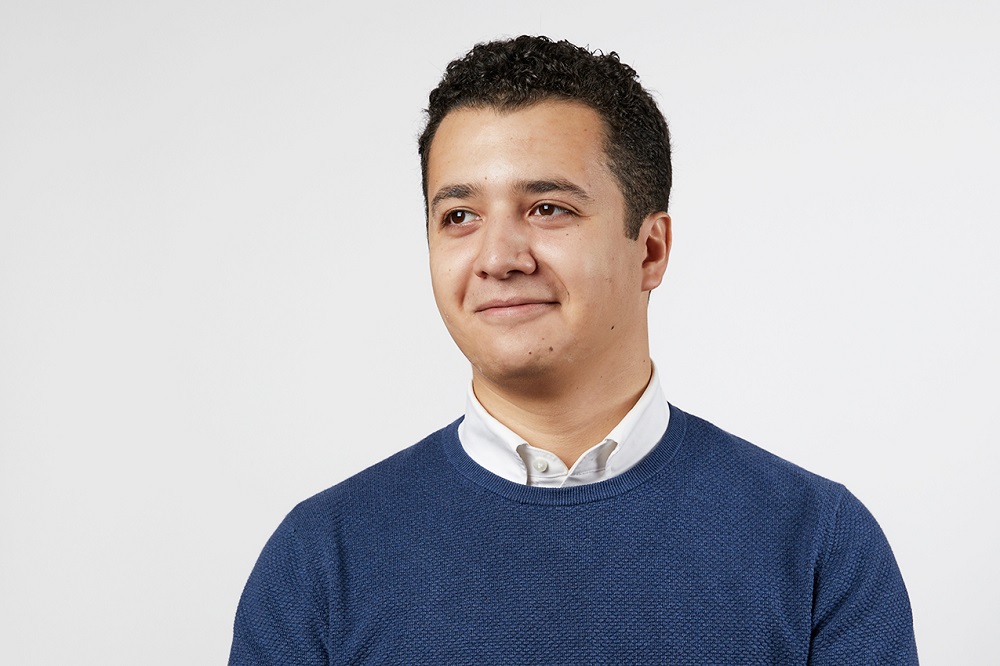
These stories spotlight the individuals driving the future of research: their academic journeys, areas of focus and what the opportunity means to them. In this edition, we meet Nail, who has started his PhD in engineering at the University of Cambridge.

My name is Neil, and I will be studying statistics, machine Learning and Information Theory. So I will be attending the University of Cambridge during my PhD. I hope to tackle challenges in modern machine learning, concrete challenges, but through a theoretical lens. More specifically, I'm interested in leveraging statistics, probability information theory, to understand how and what model actually learn. Individually speaking, I would like to learn how to conduct independent and, uh, impactful research, uh, how to, to learn how to formulate, uh, and formalize questions, uh, scientific questions and how to bridge the gap between theoretical aspects and uh, empirical evidences.
Open video transcript

Nail’s journey so far

With the support of a G-Research Scholarship, Nail is beginning a PhD in Engineering at the University of Cambridge, where he’ll explore the theoretical foundations of generative models and their behaviour at scale. His work sits at the intersection of stochastic analysis, optimal transport and probabilistic machine learning – combining mathematical rigour with questions that matter for the future of AI.

“I am incredibly grateful to be supported by G-Research to pursue a PhD at Cambridge. My research aims to build rigorous theoretical foundations for diffusion and flow-based generative models – understanding how errors propagate, how geometry shapes the learning problem and what are these models’ limits.”

A previous research stay in Cambridge gave Nail a glimpse into the unique atmosphere that now shapes his PhD experience.

“The University brings together passionate and dedicated individuals in a calm, focused setting that fosters deep work. Its history and academic heritage create a constant sense of inspiration and purpose.”

From theory to real-world impact

Nail’s research is shaped by one of the most consequential open questions in modern machine learning – understanding why generative models work and when they fail.

“A development that has shaped my thinking is the realisation that as generative models become infrastructure, used to produce the data that trains the next generation of models, questions about error accumulation and model collapse become unavoidable. I want to understand these failure modes at a mathematical level, not just observe them empirically.”

He hopes his work will strengthen the theoretical underpinnings of generative modelling while shedding light on the long-term stability of AI systems trained in increasingly self-referential settings.

“I want my research to give practitioners and theorists alike a clearer picture of what diffusion models are actually doing, connecting them to optimal transport, to geometry, to classical probabilistic ideas, so we can build systems that are not just powerful, but understood.”

Opening Doors Through NextGen

For Nail, the G-Research Scholarship has opened the door to new opportunities – making his PhD possible while connecting him to a wider research community.

“The G-Research Scholarship means a great deal to me; it opens doors that would otherwise be hard to access and turns that aspiration into reality. It also offers the chance to engage with like-minded students and to learn from the people and ideas driving the firm behind it.”

He’s looking forward to contributing his curiosity to a community united by a shared depth of thought.

“I admire that G-Research’s researchers strive for a profound understanding of the tools they use, approaching challenges in ways that are often non-intuitive and unconstrained by convention. I’m eager to contribute my own curiosity to that environment.”

What is G-Research NextGen?

With a mission to solve the world’s most complex challenges, we’re committed to shaping the future of research and innovation.

Through G-Research NextGen we will work with academic partners, educational organisations and charities to help support the next generation of STEM talent.

Learn more

Quickfire with Nail

How do you recharge outside of research?

Playing team sports like football or basketball. They’re a great outlet for energy and help me return to my work with a clear head.

Your dream research collaboration?

A team where the stakes of getting generative models right are concrete — biology, climate, drug discovery — fields where synthetic data could genuinely accelerate science and where model collapse isn’t just a theoretical concern but something with real consequences.

A recent idea that’s changed how you think?

That models trained on their own outputs eventually collapse and what that implies philosophically. Reality has some structure that is genuinely hard to capture and when you remove it from the training loop something irreversible is lost. It seems obvious in hindsight, but it raises a deeper question: what exactly is it about real data that synthetic data can’t replicate? I find that more interesting than any specific result.

What do you value most about being a G-Research Scholar?

The sense of opportunity and community. It’s a chance to connect with others who share the same curiosity and depth of thinking.

What makes Cambridge special for research?

It’s the perfect balance of focus and inspiration – a calm environment filled with passionate people, steeped in history and purpose.

Stay up to date with G-Research