G-Research 2026 PhD prize winners: University of Oxford

1 July 2026
  • News
  • Quantitative research

Every year, G-Research runs a number of different PhD prizes in Maths and Data Science at universities in the UK, Europe and beyond.

Each prize is worth up to £10,000 and is open to final or penultimate year PhD students at specific universities, working across areas including Machine Learning, Quantitative Finance and Mathematics.

We’re pleased to announce the winners of this PhD prize, run in conjunction with the University of Oxford.
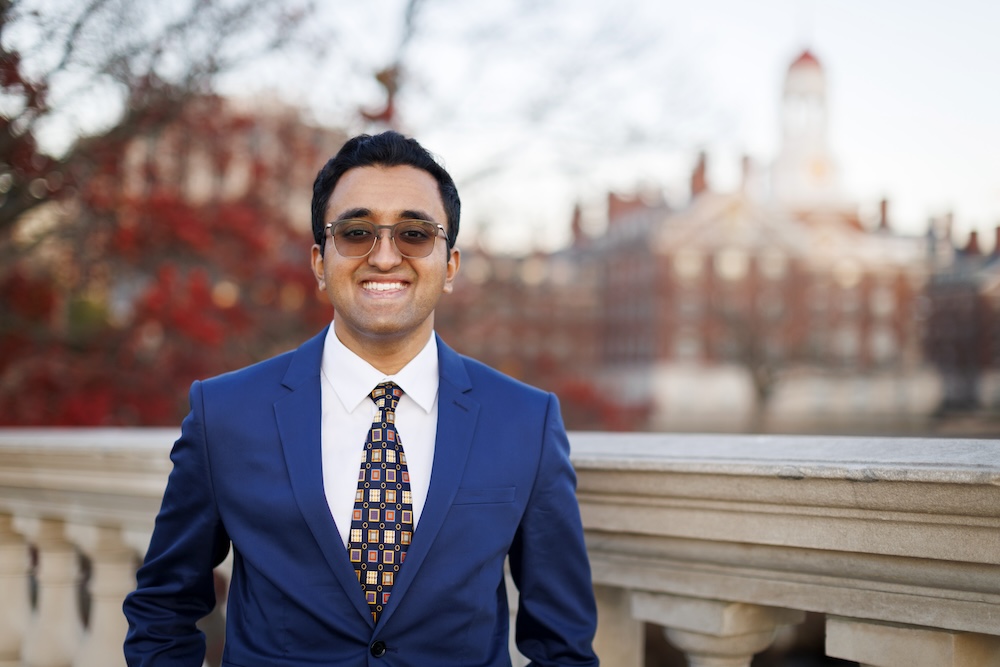

Ayush Noori

“My research intersects AI, neuroscience and medicine. I develop AI technologies that improve the understanding, diagnosis and treatment of neurological disorders and other currently unsolved complex diseases. For example, I recently introduced PROTON, a relational foundation model for neurological discovery.

“My long-term goal is to build self-improving, closed-loop discovery engines that pair AI-based hypothesis generation with deep experimental and clinical evaluation, accelerating breakthroughs in neurological research. You can learn more about my work here.”

Haitz Saez de Ocariz Borde

“During my DPhil, my research centered on Geometric Deep Learning, with a particular focus on the geometry of latent spaces.

“This included developing and leveraging tools from metric and differential geometry, fractal methods and spacetime manifolds to study relationships between continuous embedding spaces and graphs in the context of representation learning.

“I also worked on the scalability of graph neural networks and graph transformers, long-range interactions on large graphs and generative modeling.”

Alice Luscher

“One of the main open questions in theoretical physics is a formulation of a theory of quantum gravity in order to understand objects such as black holes and the big-bang.

“My research lies at the interface between mathematics and physics, employing powerful geometrical methods to study properties of black holes and to uncover universal underlying structures within quantum gravity.”

Cedric Pilatte

“My research looks at analytic number theory and additive combinatorics.

“I am particularly interested in multiplicative functions, whose statistical properties encode fundamental information about the distribution of prime numbers.

“Prime numbers exhibit a degree of ‘pseudo-randomness’. A substantial part of my research is devoted to proving quantitative results which describe this behaviour via multiplicative functions.

“More generally, I am interested in diverse problems in number theory with analytic or combinatorial aspects. For example, in a recent project, I used analytic number theory techniques to prove theoretical guarantees for a new class of quantum algorithms.”

Learn more about our PhD prizes

We run multiple PhD prizes every year across the UK, Europe and more.

Abstract waves flowing diagonally over a dark glossy surface creating smooth ripples and soft light to dark gradients resembling draped fabric

Latest Events

  • Quantitative research

13th Bachelier World Congress

29 Jun 2026 - 03 Jul 2026 University of Bologna, Belmeloro District, Italy
  • Machine learning
  • Quantitative research

ICML 2026

06 Jul 2026 - 11 Jul 2026 COEX Convention & Exhibition Centre, Seoul, South Korea
  • Machine learning
  • Quantitative research

EuroPython 2026

13 Jul 2026 - 19 Jul 2026 ICE Krakow Congress Centre

Stay up to date with G-Research