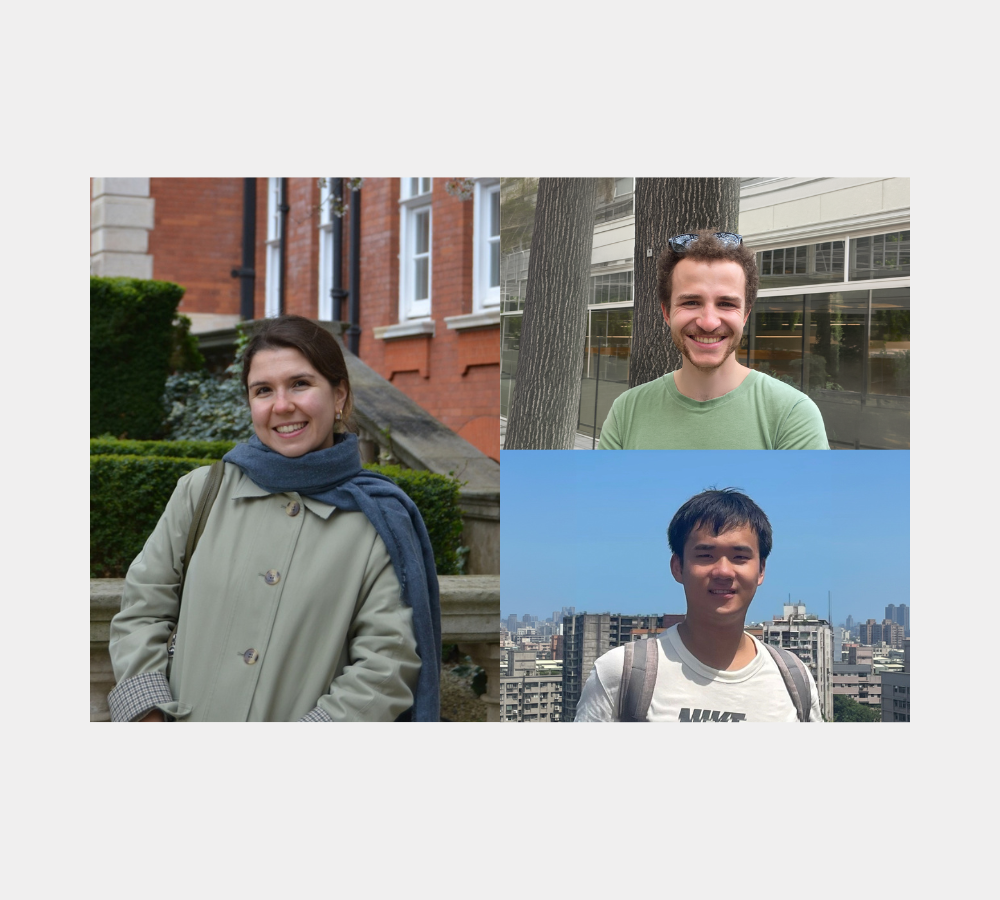
Each month, we provide up to £2,000 in grant money to early career researchers in quantitative disciplines.
Our aim is to support and assist PhD students and postdocs conducting research, particularly with costs that may be difficult to get funding for elsewhere, for example, travel for those who are caring for children, or expenses for volunteer work related to research.
Read on to hear from our latest winners, their research and how our grants will aid their work.
May grant winners
Riccardo Cadei (Institute of Science and Technology Austria)
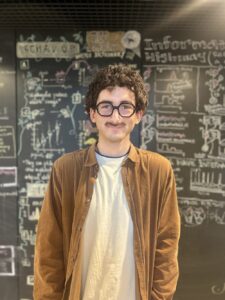
“I am a researcher at the intersection of causal inference and modern machine learning.
“My work develops methods to scale causal reasoning to modern scientific settings, where complex measurements and learned representations are transforming what can be inferred from experimental and observational data.
“G-Research’s support will allow me to attend the Isaac Newton Institute workshop on Causality and Machine Learning, where I will exchange ideas with leading researchers in the field and refine new approaches for causal analysis in the age of large-scale scientific data.”
Axel Brando (Universitat de Barcelona)
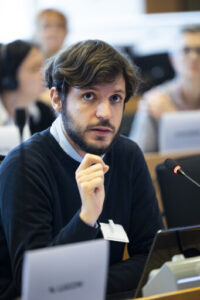
“I am a computer scientist and mathematician working on trustworthy AI for high-stakes decision systems.
“I lead a multidisciplinary research group focused on uncertainty quantification, causality, explainability, ethical AI and regulatory AI, with applications across critical domains such as finance, safety-critical systems, digital platforms and pharmaceutical research.
“Our recent work includes several contributions to top-tier AI venues, including NeurIPS and ICML, with a strong focus on making AI systems more reliable, interpretable and useful for real-world decision-making under uncertainty.
“The G-Research grant will help cover part of my travel expenses for attending ICML 2026 and support the presentation of several accepted papers from the multidisciplinary group that I lead.”
Gabriel Flath (University of Oxford)
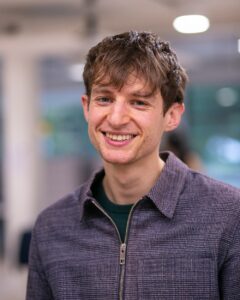
“I am a PhD student working on probability theory and models from statistical physics. I focus on the genealogy, overlap and spatial distribution of extreme particles.
“I also explore branching optimisation in high dimensions to characterise the coalescent structure of elite solutions, bounding the loss barriers between distinct minima.
“The G-Research grant will support my visit to Beijing Normal University with Prof. Xinxin Chen, where we will explore properties of the front of d-dimensional branching Brownian motion.”
Konstantinos Barmpas (Imperial College London)

“I am a Postdoctoral Researcher at Imperial College London, where I develop generative foundation models for biosignals with the goal of learning versatile, task-agnostic representations.
“My research focuses on building models that generalise across subjects and recording conditions, enabling efficient adaptation to a wide range of downstream applications.
“This grant would support my attendance at ICML 2026, one of the leading conferences in machine learning, where I have been recognised with a Gold Reviewer Award for the quality of my reviews this year.”
Congratulations to all of our grant winners.