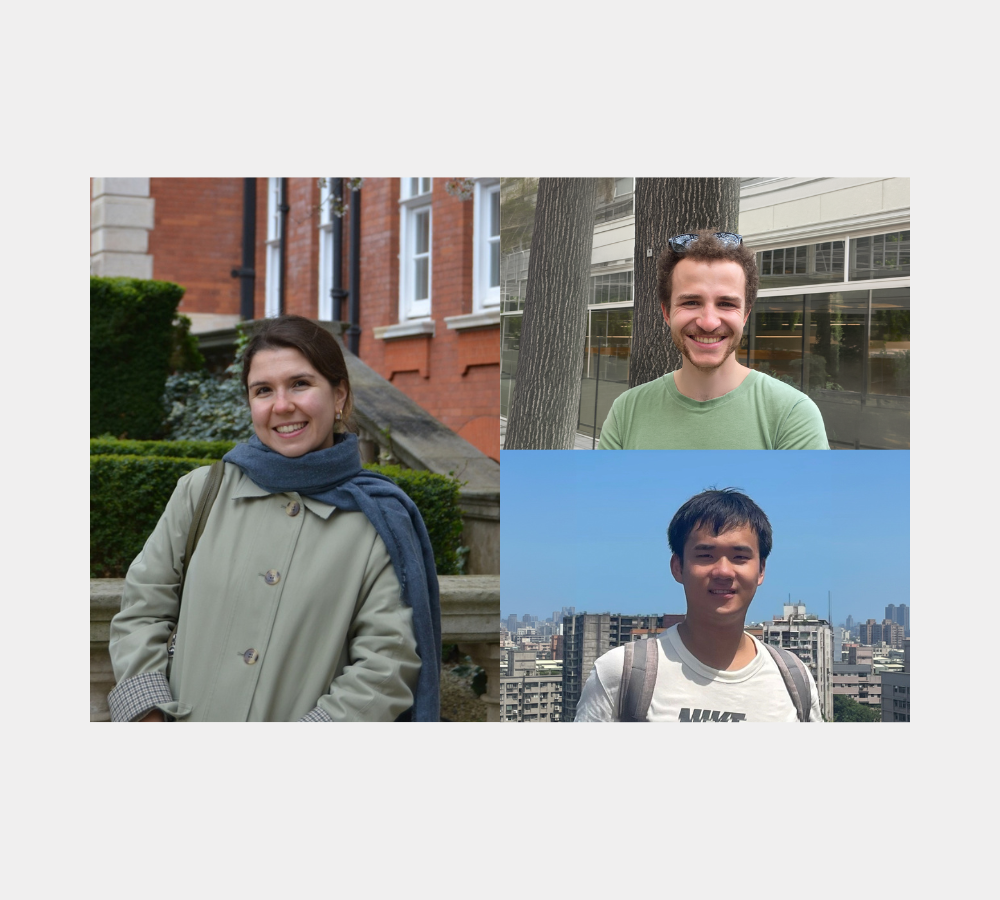
Each month, we provide up to £2,000 in grant money to early career researchers in quantitative disciplines.
Our aim is to support and assist PhD students and postdocs conducting research, particularly with costs that may be difficult to get funding for elsewhere, for example, travel for those who are caring for children, or expenses for volunteer work related to research.
Read on to hear from our latest winners, their research and how our grants will aid their work.
June grant winners
Iker Caballero Bragagnini (University of Bristol)
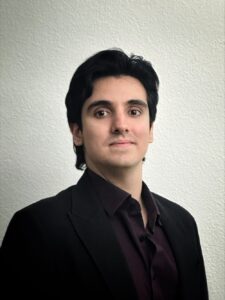
“My research interests lie at the intersection of geometric deep learning, statistical learning theory and quantitative finance.
“At LOGML, I will work on neural generative models for temporal graphs, with applications to data augmentation, privacy-preserving synthetic data and the modelling of evolving relational systems.
“G-Research’s grant will support my participation in the programme before I begin my interdisciplinary PhD in Data-Driven Engineering & Sciences at the University of Bristol, where I hope to combine machine learning, stochastic modelling and financial engineering.”
Ana Radulović (Institute of Public Health of Montenegro)

“I am a biostatistician and AI researcher affiliated with the Institute of Public Health of Montenegro, with more than nine years of experience bridging rigorous statistical methods and real-world decision-making.
“My research spans public health surveillance, explainable AI and Bayesian modelling, with publications in Nature Scientific Reports and contributions to WHO working groups.
“My current project, STATCORE, is a domain-agnostic Bayesian framework that decomposes behavioural signals into latent intent with calibrated uncertainty addressing model overconfidence, explainability gaps and EU AI Act compliance requirements.
“The G-Research grant will enable me to attend OxML 2026 at the University of Oxford, where STATCORE has been accepted for poster presentation in the MLx Representation Learning & GenAI track. I am deeply grateful to G-Research for making this possible.”
Marian Schneider (ETH Zürich)
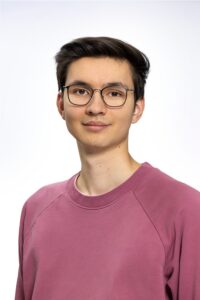
“This G-Research grant will allow me to attend the International Conference on Machine Learning (ICML) to present my latest work, ActiveUltraFeedback.
“By combining uncertainty quantification with active learning, our modular pipeline generates high-quality preference data that matches the performance of prior approaches using just one-sixth of the data points.
“As an early-stage researcher, sharing these findings and connecting with top researchers at such a prestigious venue will help me to shape my future research career, as I continue to explore my broad interests across Natural Language Processing and (3D) Computer Vision.”
Martin Wertich (ETH Zürich)
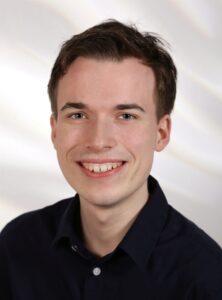
“I am a CS Master’s student at ETH Zurich, where I have also worked with the ETH AI Center and the LAS group.
“My core research interests lie in ML theory, particularly statistical learning theory, though I also actively research LLMs and RL.
“I am deeply honored to receive the G-Research grant, which enables my colleagues and me to present our recent paper, ActiveUltraFeedback, at ICML 2026 in Seoul.”
Rahul Marchand (University of Oxford)
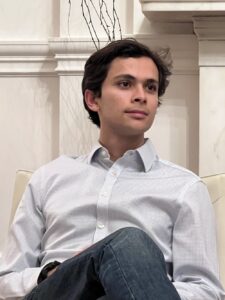
“I’m an undergraduate in Engineering Science at the University of Oxford, working on evaluating the security risks posed by AI agents.
“My research looks at whether AI systems can exploit misconfigurations and known vulnerabilities to escape the container sandboxes used to isolate them, for example, Docker.
“My paper, Quantifying Frontier LLM Capabilities for Sandbox Escape, which releases a benchmark for measuring this, was accepted as an oral at ICML 2026.
“The G-Research grant will support my travel to present it.”
Michael Samet (Aachen University)

“I am a doctoral researcher at the Chair of Mathematics for Uncertainty Quantification at RWTH Aachen University.
“I work on the development and analysis of numerical methods for high-dimensional problems in computational finance.
“My main line of work focuses on Fourier-based option pricing methods, using adaptive sparse grids, multilevel quadrature and quasi-Monte Carlo techniques.
“I also work on modeling and numerical methods for stochastic optimal control problems arising in intraday trading by renewable energy producers in electricity markets.
“G-Research’s generous support will allow me to present my work, Quasi-Monte Carlo with Domain Transformation for Efficient Fourier Pricing of Multi-Asset Options, at the International Conference on Computational Finance (ICCF 2026), held at the University of Oxford.”
Rolandos Potamias (Imperial College London)
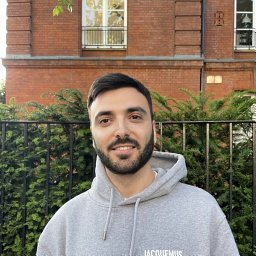
“I am an Assistant Professor at the Department of Computing of Imperial College London.
“My research is focused on Embodied AI with a particular focus on human and robot dexterity.
“G-research academic grant will support our research in robot dexterity at DexLab and equip us with high resolution tactile sensors enabling sensing in dexterous 5-fingered robots.”
Congratulations to all of our grant winners.