G-Research 2026 PhD prize winners: University of Warwick

4 August 2026
  • News
  • Quantitative research

Every year, G-Research runs a number of different PhD prizes in Maths and Data Science at universities in the UK, Europe and beyond.

Each prize is worth up to £10,000 and is open to final or penultimate year PhD students at specific universities, working across areas including Machine Learning, Quantitative Finance and Mathematics.

We’re pleased to announce the winners of this PhD prize, run in conjunction with the University of Warwick.

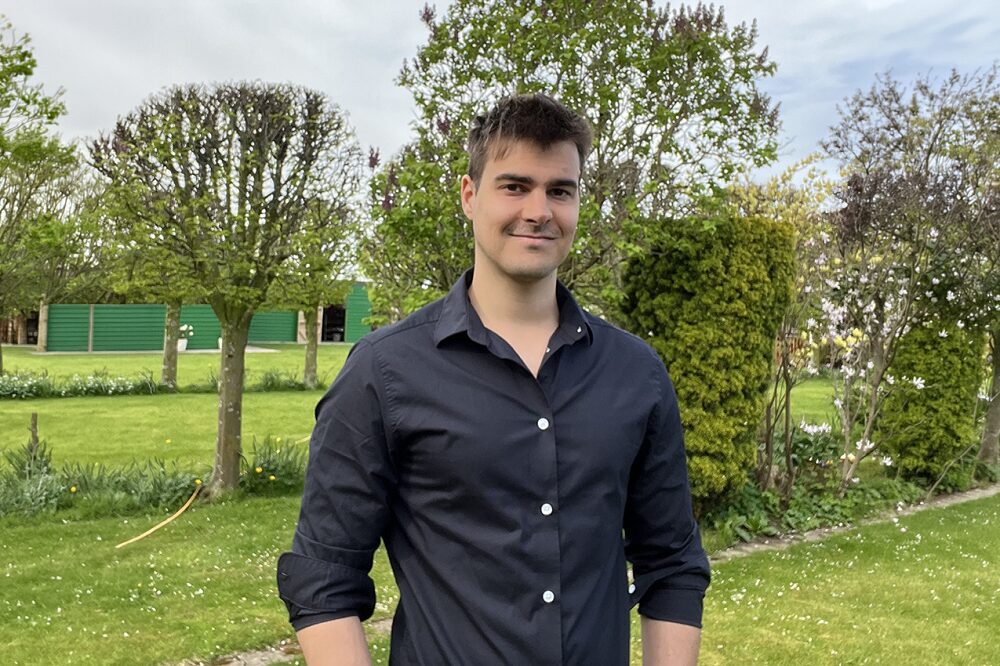
Alberto Bordino: Statistics award

“I am a final year PhD student in Statistics at the University of Warwick.

“My research develops statistical theory and methodology for nonparametric models tailored to complex modern data structures, such as datasets with missing values or multiple data sources collected under different sampling schemes.

“Motivated by these settings, I aim to design estimation and testing procedures adapted to such data, study their fundamental statistical limits through minimax theory, and develop practical tools that help practitioners analyse incomplete and multisource datasets effectively.

“For example, in one research project I studied how to test whether missing values in a dataset occur completely at random.

“This is an important question in many real-world applications: if the mechanism determining whether a value is missing depends on the value itself, then standard analyses can become biased or misleading.”

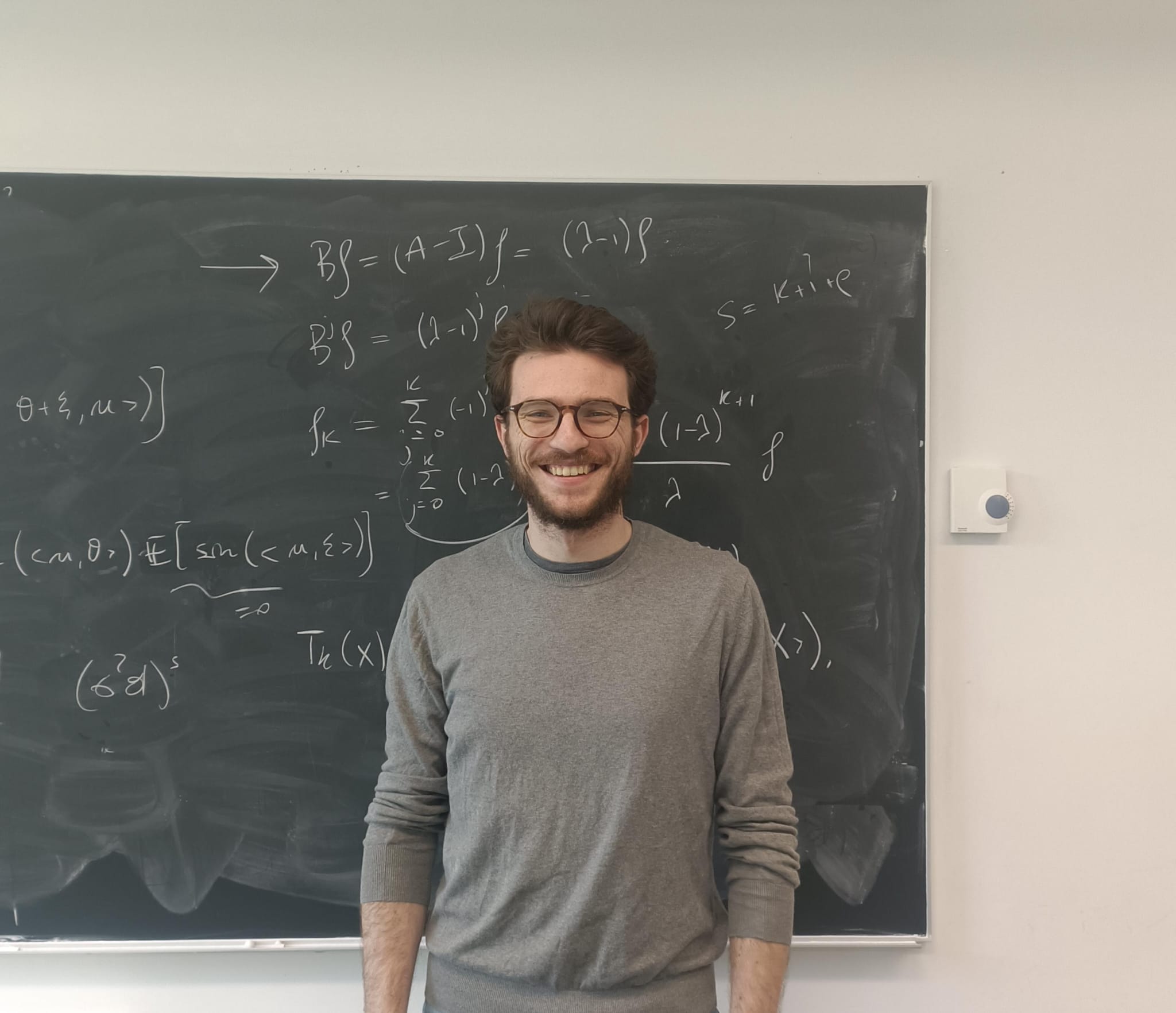
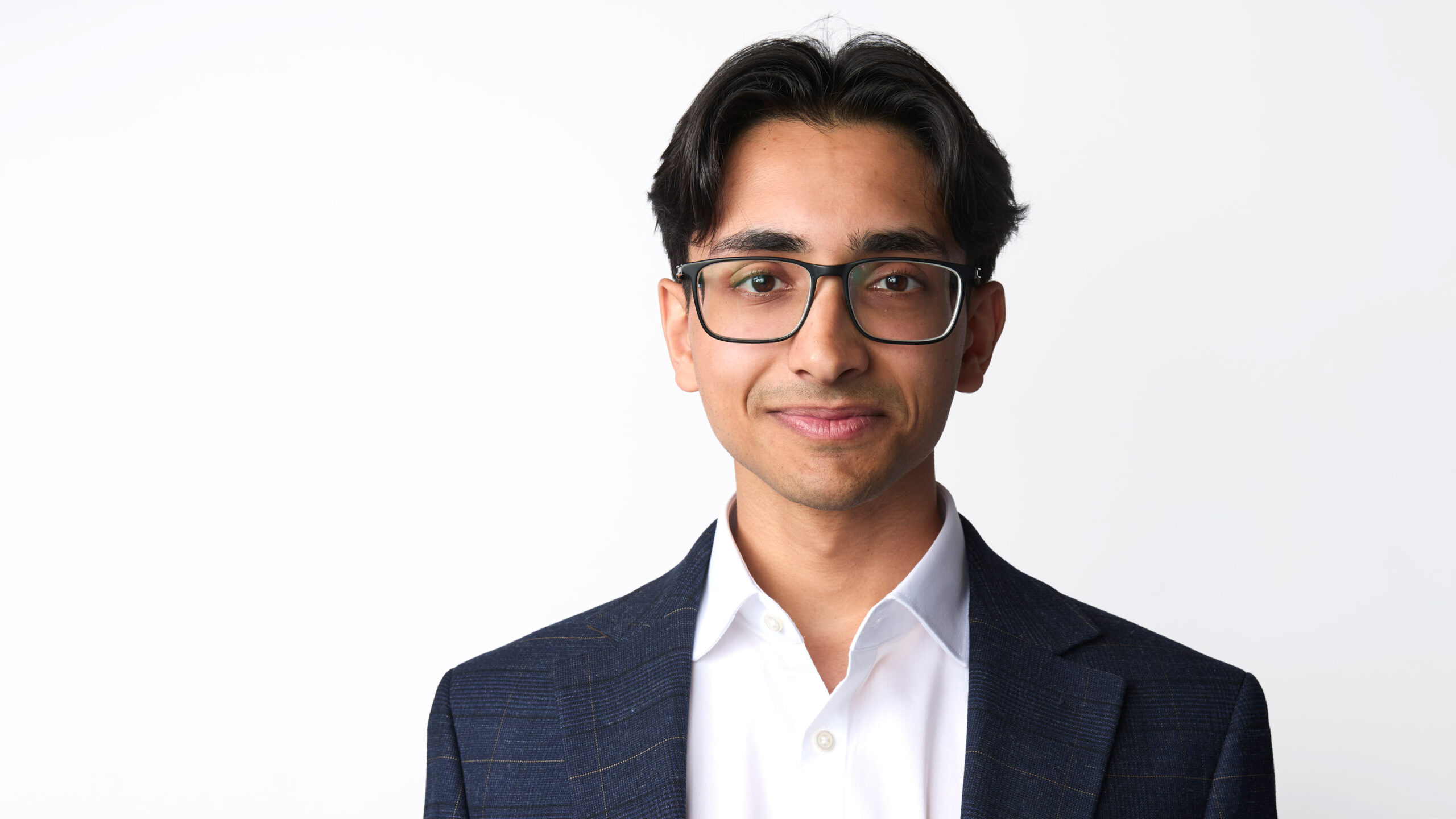
In his 4 years as a PhD student Alberto Bordino has achieved substantial contributions to nonparametric modelling of complex datasets with realistic attributes. What is remarkable is that during his ongoing PhD, Alberto's research outputs include top-quality contributions in statistical theory, machine learning and statistical software. He is evidently someone who not only strives for core and topical theoretical contributions but also ensures that his theoretical and methodological advances are accessible to the data-analytic community. Such breadth is rare in researchers of his level.

Sean Eberhard Associate Professor of Mathematics, University of Warwick

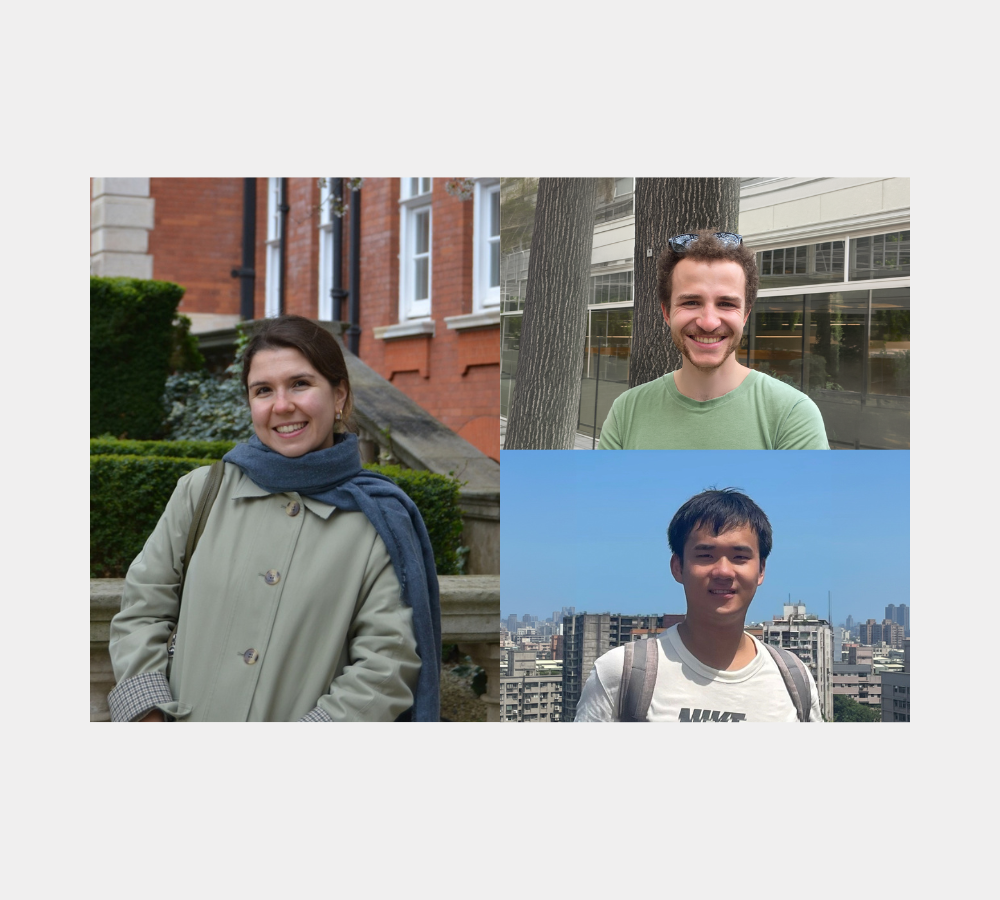
Seth Hardy: Mathematics award

“My research lies at the intersection of number theory and probability theory; I apply probabilistic methods and models to study objects that naturally arise in number theory.

“Much of my research models interesting number-theoretic functions using idealised random models, and it happens that (in some circumstances) these random models are connected to deep phenomena at the cutting-edge of probability theory. This makes the area incredibly exciting, and I have been fortunate to investigate some of these connections in my research.”

Seth works in analytic number theory, particularly on random multiplicative functions as probabilistic models for objects like the Möbius function. His results establish sharp bounds and limit laws for exponential sums and partial sums, often matching conjectural behaviour predicted by probabilistic heuristics and establishing links to Gaussian multiplicative chaos. These problems sit very close to central questions around cancellation in multiplicative functions and the zeta function, and his work demonstrates both technical strength and conceptual positioning in a highly active area.

Sean Eberhard Associate Professor of Mathematics, University of Warwick

Martin Costa: Computer science award

“My research interests primarily lie within the field of algorithms, with a particular focus on dynamic data structures, graph algorithms and clustering algorithms.

“Throughout my PhD, my work on graph algorithms focused on designing efficient solutions for the classical problem of edge coloring, a basic task in combinatorial optimisation, with applications in scheduling and network routing.

“Clustering is one of the basic tasks in unsupervised learning. My research in clustering primarily focused on designing dynamic algorithms for efficiently maintaining high quality clusterings of datasets as they evolve over time.”

Martin designed a near-linear time algorithm for the classical/textbook problem of edge colouring in graph theory, thus accomplishing a monumental progress.

Sean Eberhard Associate Professor of Mathematics, University of Warwick

Learn more about our PhD prizes

We run multiple PhD prizes every year across the UK, Europe and more.

Abstract waves flowing diagonally over a dark glossy surface creating smooth ripples and soft light to dark gradients resembling draped fabric

Latest Events

  • Quantitative engineering
  • Quantitative research

Pub Quiz: London 2026

23 Sep 2026 London - to be confirmed after registration
  • Machine learning
  • Quantitative research

NeurIPS 2026

06 Dec 2026 - 12 Dec 2026 The International Convention Centre, Sydney

Stay up to date with G-Research

Join our talent network

Be the first to hear about new roles and opportunites to join our team.