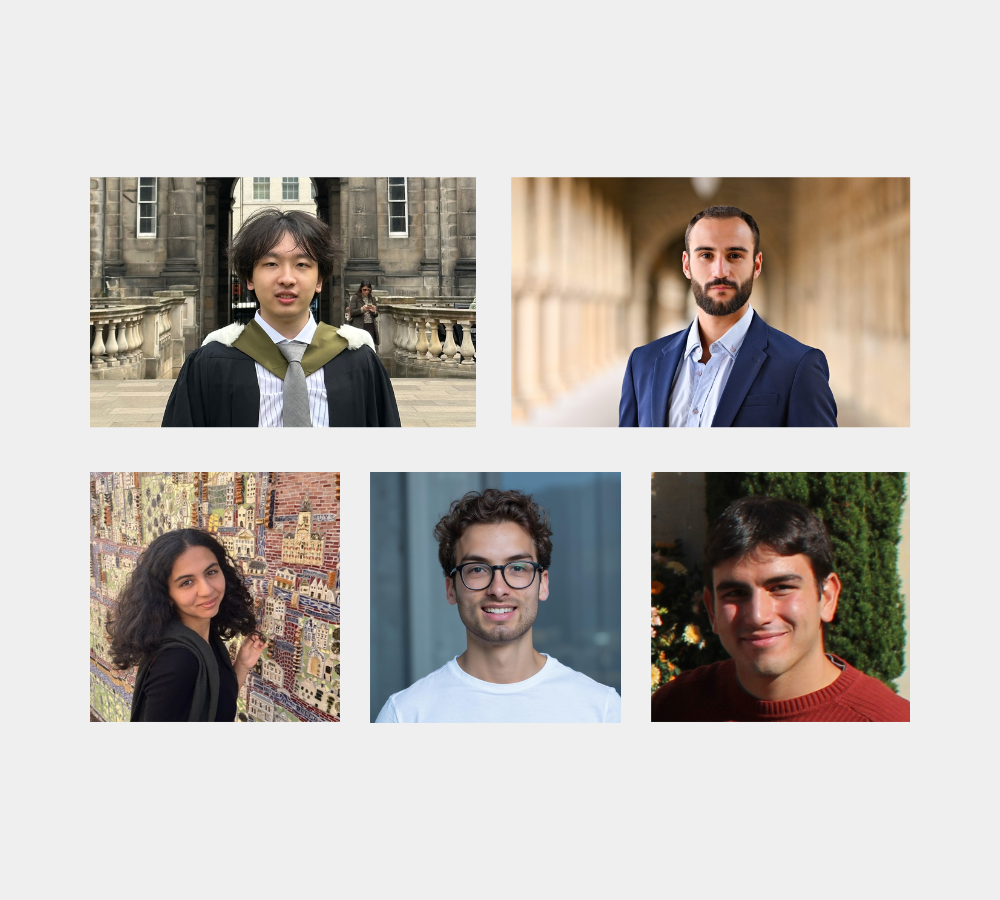
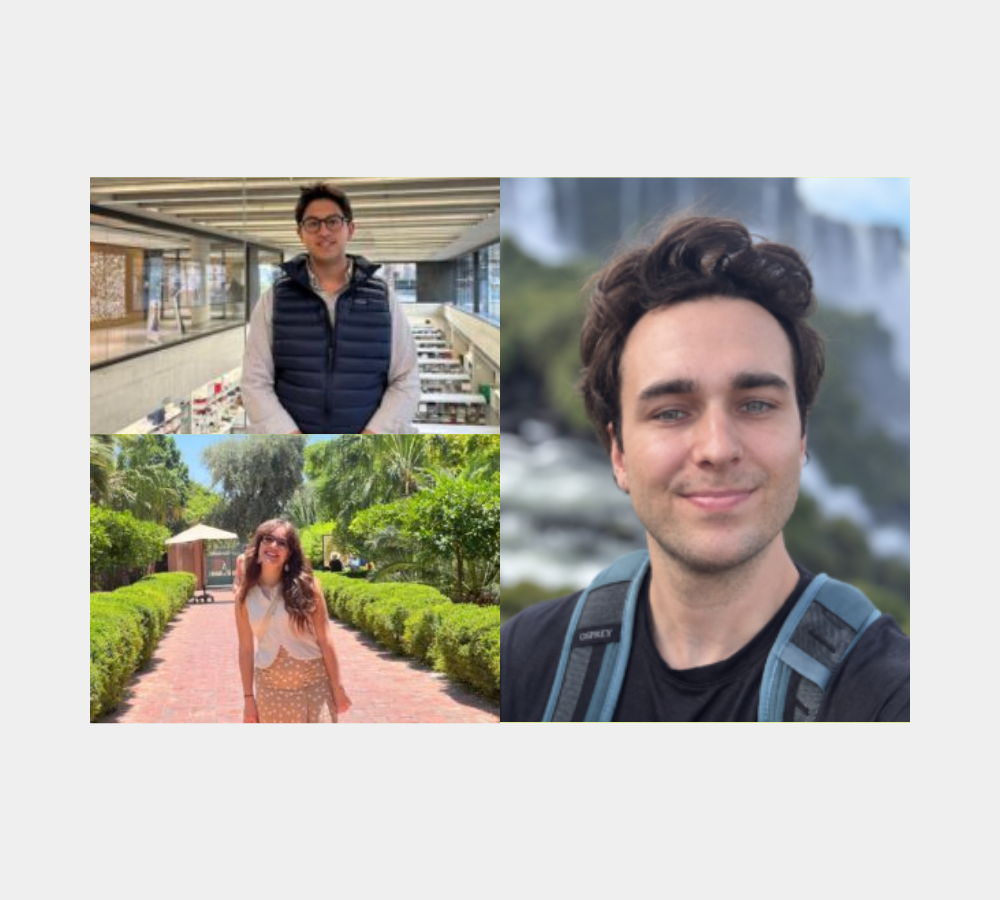
Each month, we provide up to £2,000 in grant money to early career researchers in quantitative disciplines.
Our aim is to support and assist PhD students and postdocs conducting research, particularly with costs that may be difficult to get funding for elsewhere, for example, travel for those who are caring for children, or expenses for volunteer work related to research.
Read on to hear from our latest winners, their research and how our grants will aid their work.
September grant winners
Ken Deng (University of Oxford)
“My research interest lies in how multimodal LLMs understand 3D space.
“In the project SKR-ID (Self-Knowledge Re-expression-Iterative Debiasing), we study the spatial reasoning bias and language bias MLLMs exhibit when judging coarse camera trajectories, and propose an iterative self-knowledge re-expression method to reduce these biases.
“The G-Research grant supported my conference attendance to present this work and connect with the vision-language research community.”
Luis Wiedmann (University of Munich)
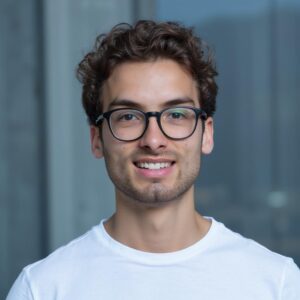
“I am a PhD Student at the Technical University of Munich, focusing on multimodal models. My interests span their representations, training and downstream evaluations and usage.
“The grant will kindly support me in attending NeurIPS.”
Mariam Baghdasaryan (University of Cambridge)

“This summer I worked on a research project with G-Research on whether AI can write mathematical proofs that a computer can check line by line.
“I gave AI agents different sets of tools, such as the ability to look up known results in a library of mathematics or to hand off parts of a problem to helper agents, and measured which tools actually made them better at proving theorems.
“The project led to a paper accepted at the Math-AI workshop at NeurIPS 2026, and this grant will allow me to travel to Atlanta to present it.”
Mateo Petel (Stanford University)
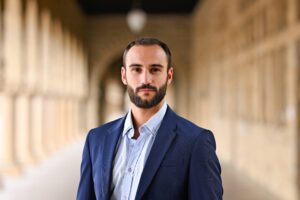
“I’m a graduate researcher at Stanford working on the mathematical foundations of reliable autonomous AI.
“My research develops methods to rigorously evaluate AI agents with the broader ambition of making autonomous systems trustworthy in scientific research and other high-stakes settings.
“G-Research’s support will help me present five accepted papers across four workshops at NeurIPS 2026 in Sydney and connect with researchers working on these challenges.”
Efe Görgüner (University of Oxford)

“I study Computer Science at the University of Oxford.
“Over the past year I conducted research in computational neuroscience, aiming to get us closer to an understanding of the learning algorithms utilised by neurons in the brain.
“More specifically, I researched how biological neurons can solve the unsupervised learning problem of blind source separation. Working with my co-authors, our work resulted in a paper titled “Normative Networks for Source Separation via Local Plasticity and Dendritic Computation” which was accepted as a spotlight paper at NeurIPS 2026. The grant will support my travel to the conference.”
Congratulations to all of our grant winners.