Each month, we provide up to £2,000 in grant money to early career researchers in quantitative disciplines.
Our aim is to support and assist PhD students and postdocs conducting research, particularly with costs that may be difficult to get funding for elsewhere, for example, travel for those who are caring for children, or expenses for volunteer work related to research.
Read on to hear from our latest winners, their research and how our grants will aid their work.
July grant winners
Fernando Ruiz-Mazo (University of Cambridge)

“My research focuses on understanding how in-context learning emerges in frontier AI models and identifying the conditions under which these capabilities generalise reliably to shifts in the underlying data distribution.
“I am grateful to G-Research for supporting this work through a research grant. The funding will cover the costs of accessing frontier language models during the first year of my PhD, enabling me to conduct more ambitious experiments and accelerate progress in this research area.”
Georgios Voulgaris (University of Oxford)
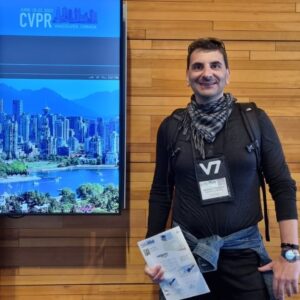
“I am a postdoctoral researcher in Computer Vision and Deep Learning at the University of Oxford.
“My research explores how principles from visual perception and physics can be built into deep learning architectures to improve robustness, interpretability and generalisation in challenging real-world settings.
“In particular, I work on convolutional and hybrid models for multimodal and multispectral sensing, treating the physical properties of the data as a source of inductive bias rather than noise.
“This grant from G-Research will support my research and the dissemination of my latest work on physics-aware representation learning for multispectral and thermal remote sensing.”
Mathieu Dos Santos (Imperial College London)

“I am a PhD candidate in Theoretical Condensed Matter Physics, specialising in the optical properties of materials.
“My research investigates how structural and other forms of disorder alter the spectral properties, specifically the optical conductivity, of honeycomb lattices like graphene. I also explore the material properties that remain invariant under random structural changes.
“The G-Research grant will support my attendance at the Imperial College Summer School in Machine Learning, Applied Statistics and Quantitative Finance, where I will study modern machine learning techniques and their applications to time series analysis.”
Hazel Kim (University of Oxford)
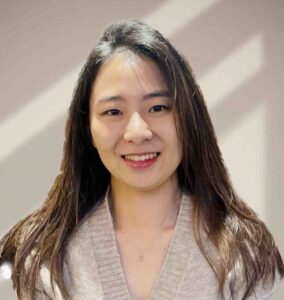
“My research centres on building interpretable and controllable language models, with a focus on how they acquire language and reasoning ability from limited or imperfect data.
“I am particularly interested in moving models beyond surface correlations toward genuine causal inference, quantifying the information they use, and understanding the emergent capabilities that arise at scale.
“The G-Research grant will support my participation in MLSS 2026 in Tübingen, where lectures and tutorials on causal inference, foundation models, learning theory and trustworthy ML directly align with these interests, and where I can present my work and exchange ideas with researchers across academia and industry.
“I believe this interdisciplinary training will sharpen my long-term goal of understanding how increasingly capable models can reason reliably and benefit society.”
Bethan Evans (University of Oxford)
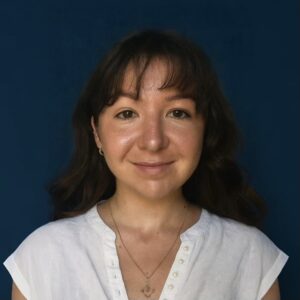
“I am a Mathematics DPhil student at the University of Oxford working on weight-space modelling in machine learning, with a particular focus on applications to model merging.
“My research studies how separately trained or fine-tuned neural networks can be combined in a principled way, aiming to improve our understanding of the geometry and structure of neural network weights.
“This award will support my travel to the Princeton Machine Learning Summer School.”
Daniel Kaddaj (University of Cambridge)
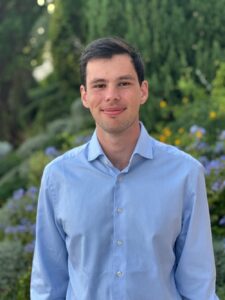
“I am a PhD student in Statistics at the University of Cambridge interested in establishing more rigorous mathematical foundations to understand the capabilities and limitations of transformers to do in-context learning, especially as applied to Bayesian inference.
“The G-Research grant will allow me make use of the advanced coding and mathematical reasoning capabilities of a ChatGPT Pro subscription to further this research.”
Congratulations to all of our grant winners.