Our current engineering roles in London. Thrive in collaborative and dynamic environment where smart people learn and grow together.







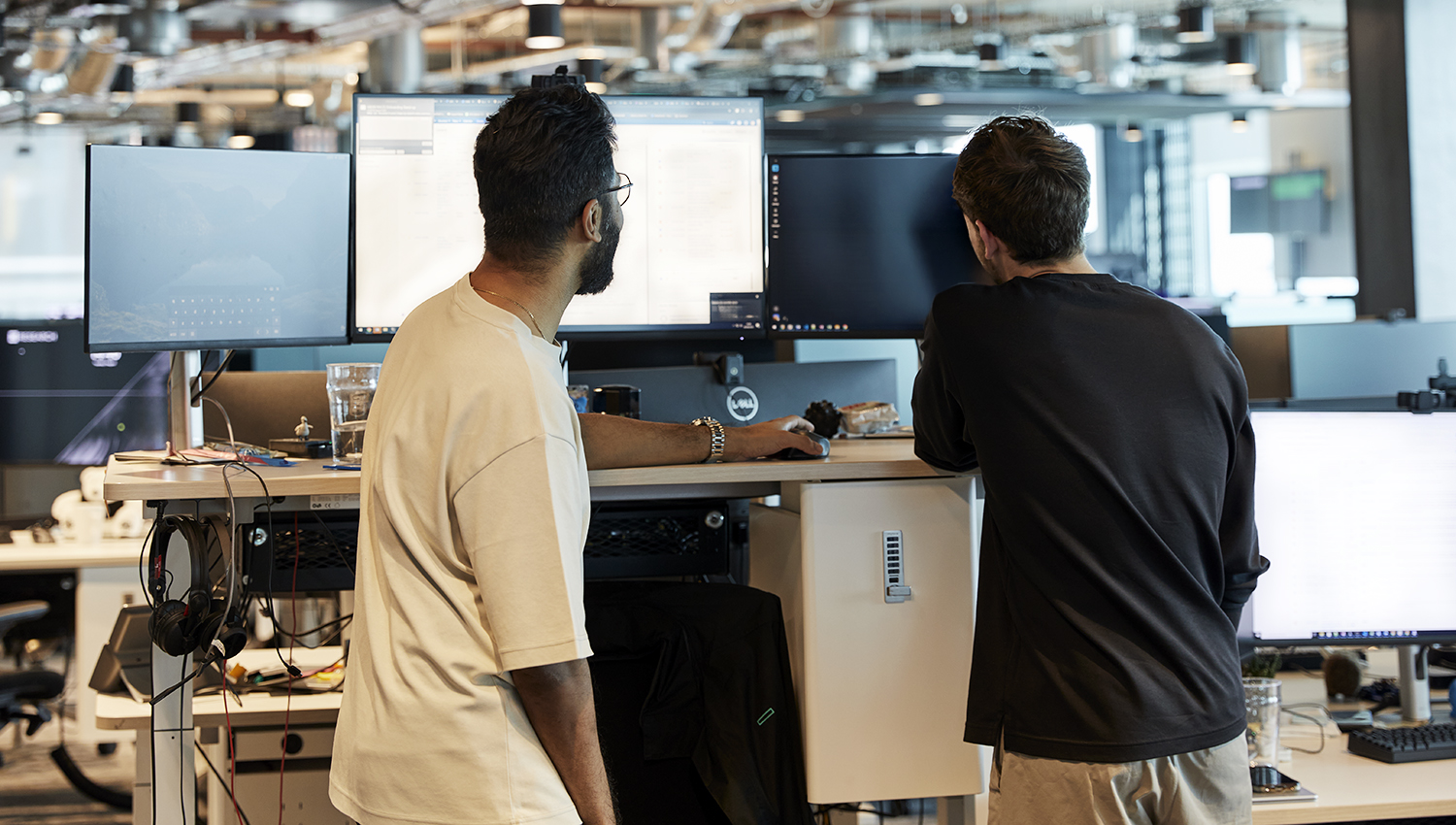
Our engineers design and build advanced platforms and infrastructure that power high-performance solutions, turning complex challenges into real-world results.

Our quantitative engineers, also known as research engineers, are the driving force behind our success. Working side-by-side with researchers at the cutting edge, they leverage near-infinite compute power to help us pursue our ultimate goal: predicting the future.
From machine learning and data engineering to high-performance computing and low-latency systems, our specialist teams build the foundations that turn ambitious ideas into reality.

Our infrastructure is built to handle and process extraordinary volumes of data every day – reliably, efficiently and at scale.
Driven by a mindset of automation and innovation, we explore everything from cloud technologies and scalable flash storage to grid computing and infrastructure as code. Whatever accelerates our teams’ most powerful ideas, infrastructure engineering makes possible.

Our current engineering roles in London. Thrive in collaborative and dynamic environment where smart people learn and grow together.
"While some people might think working in finance may not be too exciting, at G-Research, it is, especially if you see it as a problem to solve. How do we solve this algorithm? How do we get faster? This is why I think people are really excited to work here."

"I've felt very lucky to work with teams of people across the business who are generous with their time, knowledge and ideas as we collaborate to continuously build and rebuild complex systems with lots of moving parts."
"What I appreciate most about working in G-Research is the supportive and knowledgeable environment. Everyone is incredibly helpful and patient, which ensures there’s a good balance between being challenged and your workload."

"Work culture is an important aspect for me, so when I was contacted by G-Research I discovered a company where I could grow as a developer, whilst feeling like the company valued me as a person, not just a code monkey."

"My favourite part of working for G-Research is that technology is at the heart of everything we do at the company, driving the business forward and enabling us to stay ahead of the competition."

"Before G-Research I’d completed internships at a few companies whilst studying Computer Science at the University of York. Since joining, I’ve progressed from an intern to a graduate to an engineer, having worked on systems and technology core to the business my entire time."

"My favourite part of working at G-Research is the people, from my colleagues to our customers. The culture is great and encourages collaboration, which makes it easier for everyone to work together."
"My favourite thing about working here is the people. G-Research strives to hire not only the brightest minds, but good people, which in turn creates a brilliant collegiate and social atmosphere at the company."
We look for world-class engineers with varied experience. Learn more about our assessment process.
Our assessment process kicks off with our Talent Acquisition team, who will review your application and assess your fit for the role.
You will meet with a team member – or take a remote test – where your technical abilities will be put to the test.
We will set aside technical skills and focus on getting to know you.
Here, we will take a deeper dive into your technical skills and competencies.
The final stage of our interview process is where you will meet members of your team, your future manager and functional leadership.

We find patterns in noisy, real-world datasets to predict movement in financial markets.

We identify, test and on-board the latest tech, enabling our researchers and engineers to keep innovating.

We partner with and invest in the open-source community.

Want to make an impact and have a say in what gets built? Take the next step in your career.
View our open roles