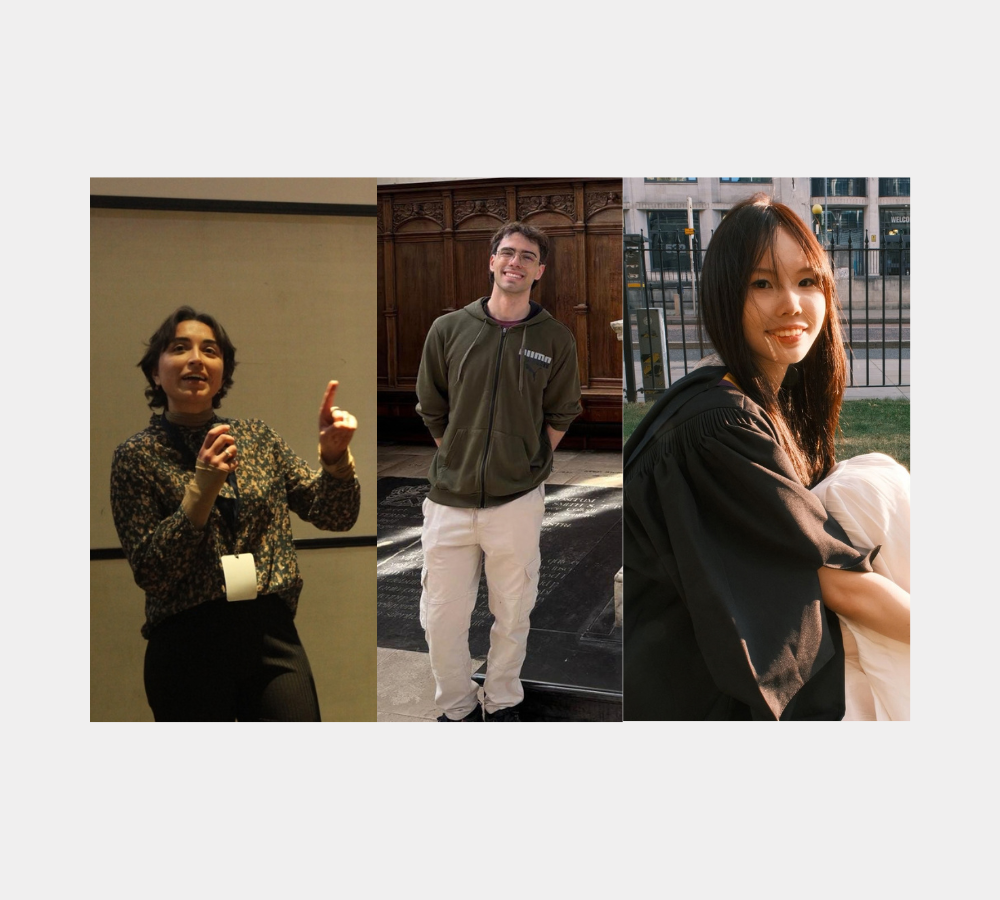
Each month, we provide up to £2,000 in grant money to early career researchers in quantitative disciplines.
Our aim is to support and assist PhD students and postdocs conducting research, particularly with costs that may be difficult to get funding for elsewhere, for example, travel for those who are caring for children, or expenses for volunteer work related to research.
Read on to hear from our latest winners, their research and how our grants will aid their work.
April grant winners
David Marco Sierra (Universitat Politécnica de Valencia)
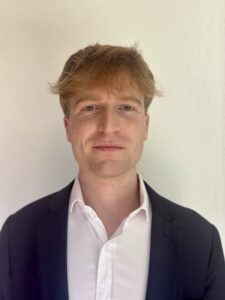
“I am an undergraduate student pursuing a double degree in Mathematics and Business Administration at the Universitat Politécnica de Valencia.”
“My interests revolve around the intersection of mathematics, finance and technology. More specifically, I focus on quantitative finance and developing systematic trading strategies.
“This summer, I will be attending a course in Machine Learning at Imperial College London. My goal is to solidify my technical knowledge and apply these new techniques directly to my upcoming bachelor’s thesis.
“The G-Research grant will support my stay in London for this program. This will allow me to fully focus on the coursework and continue building my career in the quant space.”
Tobias Schroeder (Imperial College London)
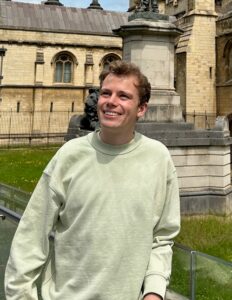
“I recently graduated with a PhD in Statistics from Imperial College London, where my research focused on principled training methods for probabilistic generative models.
“During the final year of my PhD and an internship at Microsoft Research, I began working on scalable attention-based models for long-context tasks and exploring the new applications they enable: state-of-the-art AI systems rely heavily on context, but the attention mechanism in transformer models incurs quadratic computational cost.
“This grant will allow me to attend the International Conference on Machine Learning (ICML) 2026 in Seoul to present our work, “WildCat: Near-Linear Attention in Theory and Practice”, and to connect with researchers pushing the boundaries of efficient foundation models.”
Adrian Javaloy (University of Edinburgh)

“My research lies on the intersection of tractable probabilistic modelling, causality and trustworthy machine learning. Essentially, on how to make models more robust and reliable, meeting the expectations we place on them.
“G-Research’s grant will enable me to lecture at the next European Summer School of Artificial Intelligence (ESSAI), training the next generation of AI scientists on the benefits of tractable models.”
Florian Hoppe (University of Cambridge)
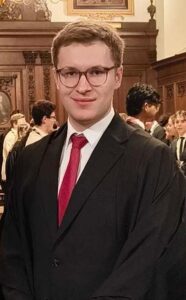
“I am an AI researcher focused on the intersection of mechanistic interpretability and AI safety.
“During my time at Cambridge, I developed a novel method called Sequential Adaptive Steering. This approach allows for the combination of multiple steering vectors to control model behavior along several dimensions simultaneously.
“Thanks to the grant from G-Research, I will be able to travel to ICML in South Korea to present my paper and engage with the global community to work towards safer AI models.”
Matia Bojovic (Istituto Italiano di Tecnologia)
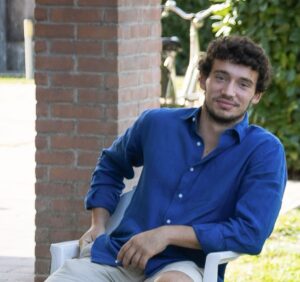
“I’m a second-year PhD student working on optimisation for machine learning.
“My research focuses on designing algorithms that are parameter-free or robust to the choice of the learning rate, with the aim of reducing the costly tuning procedures often required in modern machine learning.
“The G-Research grant will support my PhD journey by helping me attend the SIAM conference on Optimisation in Edinburgh, where I will present my latest work and connect with the wider optimisation and machine learning communities.”
Matthias Grützner (ETH Zurich)
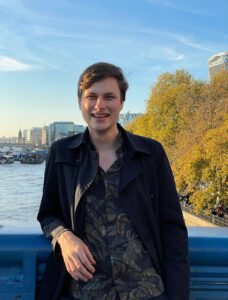
“My research focusses on overcoming the curse of dimensionality for linear partial integro-differential equations (PIDE) and stochastic differential equations with jumps (SDEJ) in high dimensions.
“The model extends the classical Black-Scholes framework for option pricing in financial mathematics by including jumps, modelled by a Poisson point process, to capture non-continuous phenomena such as market crashes.
“The key contribution of my research is the derivation of explicit error bounds in Sobolev norm, yielding bounds not only on the function itself, but also its derivative.
“The grant from G-Research will enable me to attend the quantitative finance conference by the National University of Singapore to present the recent results of my research as well as the preceding summer school on topics like Optimal Transport and AI in Finance.”
Congratulations to all of our grant winners.